
SPRAWL zero Engine and Y2K Graphics
Custom Unreal Engine 5, baked lighting, and why the game chose to look like 2003.
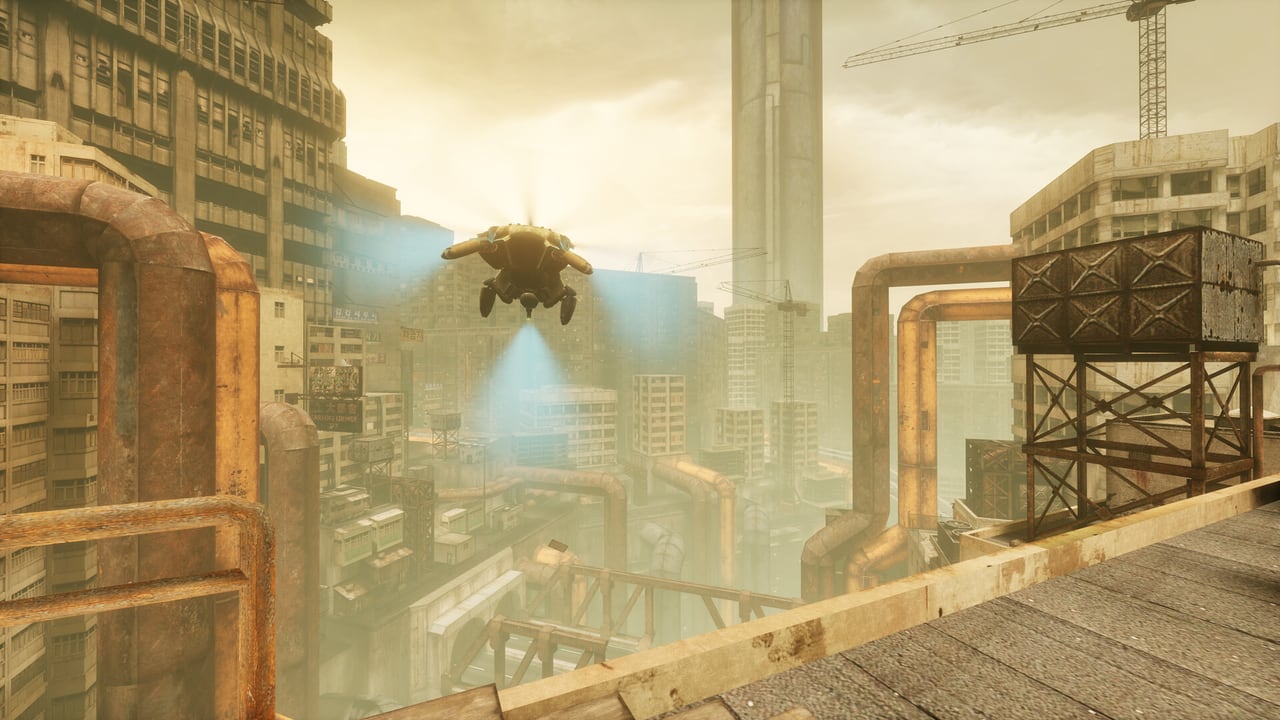
SPRAWL zero runs on a custom build of Unreal Engine 5 that MAETH modified to replicate the visual language of 2000s console shooters. This is not a retro shader filter applied to modern graphics. It is a deliberate aesthetic architecture built into the engine pipeline.
This page explains what that means technically, what it means for performance, and why the studio made this choice.
Custom UE5 build
MAETH built a modified version of Unreal Engine 5 specifically for SPRAWL zero. The standard UE5 feature set — Nanite for geometry, Lumen for dynamic lighting, Virtual Shadow Maps — is not present in the shipping build. MAETH removed or disabled these systems and replaced them with older rendering techniques that match the PS2-era aesthetic.
This is not a downgrade. It is a replacement rendering pipeline designed to look like a 2003 console game while running on modern hardware.
Key technical changes from stock UE5:
Baked lighting throughout. The demo and full game use precomputed lighting rather than real-time dynamic GI. This produces the flat, hard-edged light that defined PS2-era visuals. Every level has lightmaps baked at author time. This is why the demo loads quickly and why the game looks consistent across hardware.
Reduced draw distance fog. PS2 games had limited draw distances. SPRAWL zero simulates this with aggressive fog placement that hides level geometry loading and creates the atmospheric haze common to games like Killzone (2004) or Syphon Filter: Dark Omega.
Simplified geometry and normal mapping. Character models and environment assets use lower polygon counts and simpler normal maps than modern UE5 standards. This is intentional. The visual language of PS2 characters — readable silhouettes, high-contrast textures — is preserved by not pushing detail beyond what that era could render.
No Nanite, no Lumen. These modern UE5 features are disabled. MAETH confirmed this in developer responses on Steam discussions, noting that the aesthetic goals required building toward a specific historical look rather than using the engine’s default capabilities.
The aesthetic decision
MAETH described the Y2K aesthetic as a core design pillar, not a limitation. The 2000s console shooter era — Syphon Filter, SOCOM, Killzone, Metal Gear Solid 2, F.E.A.R. — produced games with strong visual identities despite lower technical fidelity. MAETH wanted SPRAWL zero to inhabit that visual space deliberately.
The Steam page describes it as inspired by the golden age of 2000s console FPS. The engine work is the implementation of that ambition.
Performance implications
The custom rendering approach has specific performance characteristics:
Lower GPU floor. Without Nanite and Lumen, the GPU requirements are significantly lower than a standard UE5 title. The game runs on hardware that would struggle with a stock UE5 project.
CPU-bound in dense scenes. Baked lighting shifts lighting computation to load time rather than runtime, which means CPU bottlenecks are more common than GPU bottlenecks. On multi-core CPUs, the game does not fully utilize all cores, which can produce lower-than-expected performance on high-end gaming PCs.
Consistent performance across hardware. Because the rendering is deterministic and precomputed, performance is more predictable than dynamic-lighting titles. You see approximately the same FPS in the same scene regardless of GPU generation, within the supported hardware range.
Steam Deck compatibility. The lower GPU requirements are why the game received a Playable rating on Steam Deck despite not being a standard UE5 title. The custom pipeline is more portable than the stock engine.
Visual language elements
Color palette
The game uses a desaturated palette with selective color accents. Junta colors are cold military greens and greys. IMAGO-DEI uses warmer tones with religious iconography in neon. The protagonist FIVE uses the blue-cyan of the Junta military palette. This visual language is readable at a glance, which is part of the design: you should know who you are shooting within one second of seeing them.
Texture work
Textures use the compressed-resolution aesthetic of the PS2 era. This does not mean blurry textures. It means textures with visible compression artifacts, tileable patterns, and the kind of surface detail that reads clearly at distance. Modern high-fidelity textures with micro-detail do not fit the aesthetic.
Sound design
The audio in SPRAWL zero uses compressed audio formats common to the PS2 era. Weapons have punchy, compressed sound effects. The soundtrack uses the kind of dynamic MIDI-adjacent composition that defined 2000s game scores. This is a deliberate choice matching the visual approach.
UI and HUD
The heads-up display uses the sharp-cornered, high-contrast style of 2000s console shooters. Health and adrenaline meters are prominent and readable rather than subtle. The HUD does not fade or disappear during gameplay. This is functional, not nostalgic: the game requires you to track multiple resources (health, adrenaline, current weapon) and the HUD makes that easy.
What reviewers said
Critics divided on the aesthetic. Gaming Boulevard and The Games Machine praised it as a deliberate artistic choice that sets the game apart. The Wand Report noted that the PS2 aesthetic can feel limiting in a way that is not always intentional.
The practical reality is that MAETH built a consistent visual world that communicates gameplay information faster than a photorealistic approach would. The visual style is a feature, not a bug, but it is not universally appealing.
Related pages
For the gameplay implications of the aesthetic, see combat. For how the visuals perform on handheld hardware, see Steam Deck. For the story context behind the visual world, see story.
Frequently Asked Questions
Quick answers for FIVE's first hours in the Sprawl.
What engine does SPRAWL zero use?
A custom build of Unreal Engine 5 that MAETH modified to replicate PS2-era visuals. Nanite, Lumen, and Virtual Shadow Maps are disabled. The game uses baked lighting and simplified geometry instead.
Why does the game look like a PS2 title?
MAETH deliberately built a rendering pipeline designed to look like 2000s console shooters. This is a core design pillar, not a technical limitation. The custom UE5 build is the implementation.
Does the PS2 aesthetic limit the gameplay?
It limits the visual fidelity, not the gameplay depth. Critics who connected with the aesthetic called it a strength. Critics who expected modern visuals found it limiting. It is an intentional artistic choice.
Why does it run well on Steam Deck?
Without Nanite and Lumen, the GPU requirements are significantly lower than a standard UE5 title. The custom rendering approach is more portable than stock Unreal Engine 5.
Are the graphics moddable?
No mod support was announced at launch. The custom rendering is tied to the aesthetic goals and is not designed for user modification.